Interlace Health
Designing a mobile patient intake experience that eliminated front-desk bottlenecks and replaced the third-party tools used by 46% of hospital clients.

Mobile Patient Access
46% of hospital clients were paying for a workaround.
I built the solution that made it obsolete.
Deep Dive
Background
Interlace Health is a healthcare SaaS platform that bridges the gap left by electronic health record systems by securely managing patient forms, appointments, and protected health information in a single, integrated environment. Their platform connects directly with Epic EHR, giving hospital systems a compliant, centralized layer for handling patient documentation across the care continuum.
Role
Lead Product Designer, working alongside 4 product managers and a lean engineering team.
The Problem
Hospitals were bottlenecking at the front desk.
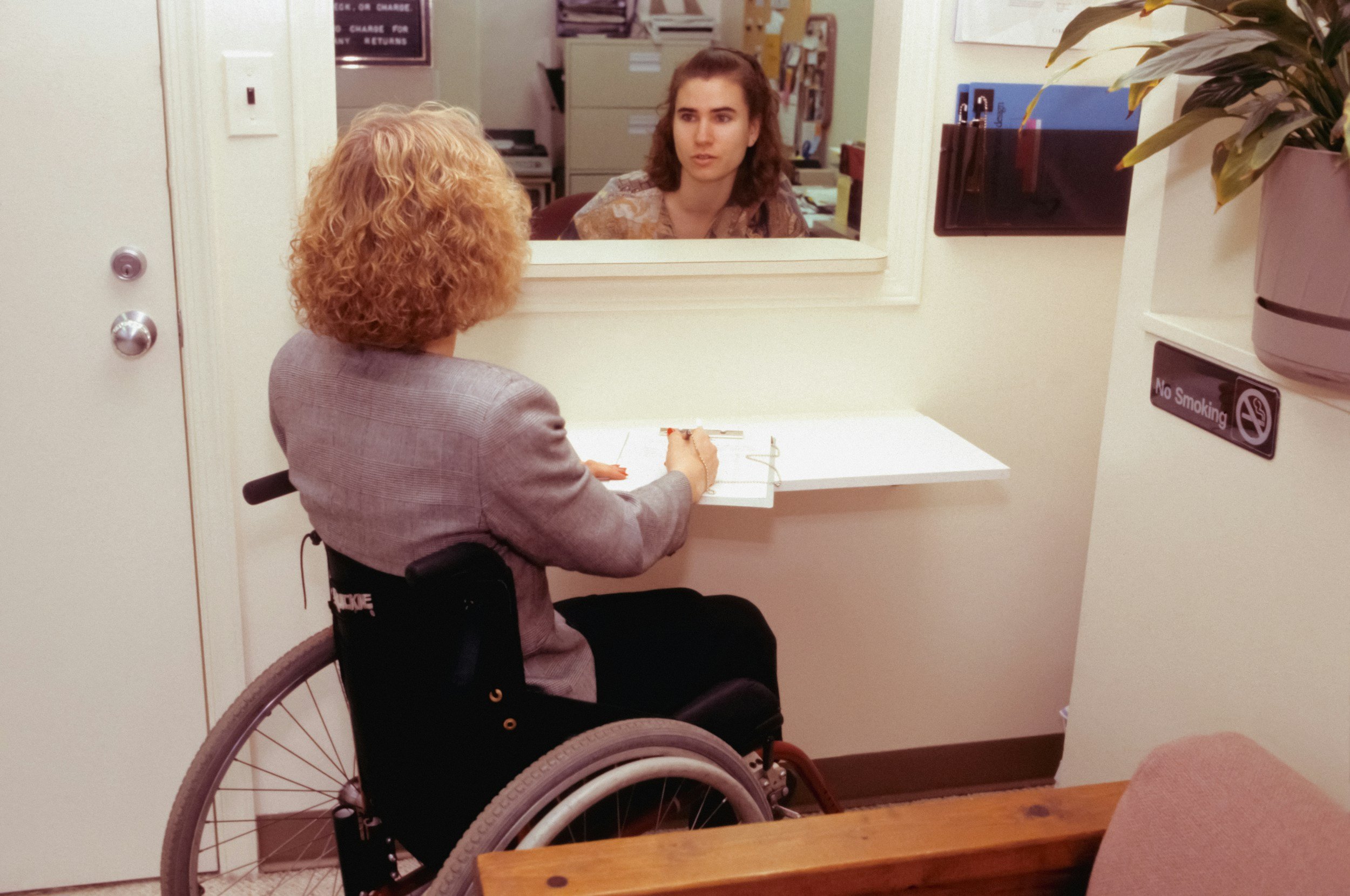
Patients arrived for appointments without having completed the necessary intake forms, creating delays of 15 to 45 minutes before care could begin. This disrupted scheduling activities, straining staff, and eroding the patient experience.
For Interlace Health, the business problem was equally significant:
The platform had no native solution for remote form completion, which meant 46% of clients were paying for a third-party tool to fill that gap. Revenue was walking out the door.
Research
I interviewed hospital receptionists to understand how delays originated and where the administrative burden was heaviest.
I then deployed surveys to a list of responsive patients provided by our clients to understand the experience from the patient side.
I wanted to learn how they received instructions before appointments, what friction they encountered, and where the process broke down.
What We Found
The delay was not a staffing problem or a scheduling problem. It was an information delivery problem.
Patients did not have a reliable, intuitive way to complete forms before they arrived. For clients without a third-party workaround, the average appointment delay ran between 15 and 45 minutes.
For those who had cobbled together an outside solution, they were absorbing that cost silently and resenting it.
The Realization
The fix did not require a new product. It required a native extension of what Interlace already did well.
If patients could see their upcoming appointments and complete the associated forms from their phone before arrival, the bottleneck disappears. Built as an embedded feature, it could be sold as a bundled add-on, that would convert a competitive liability into a revenue opportunity.

What I Designed
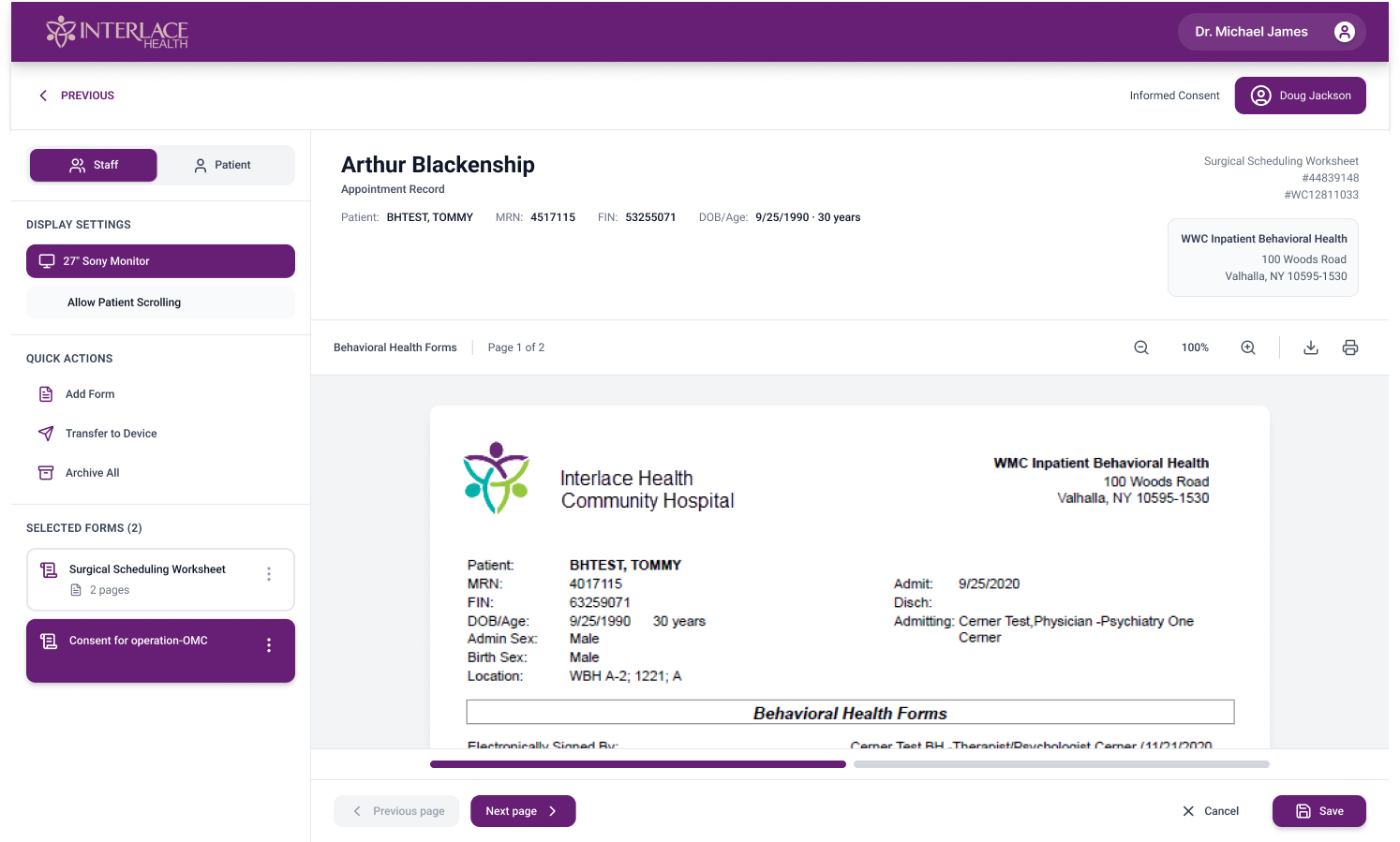
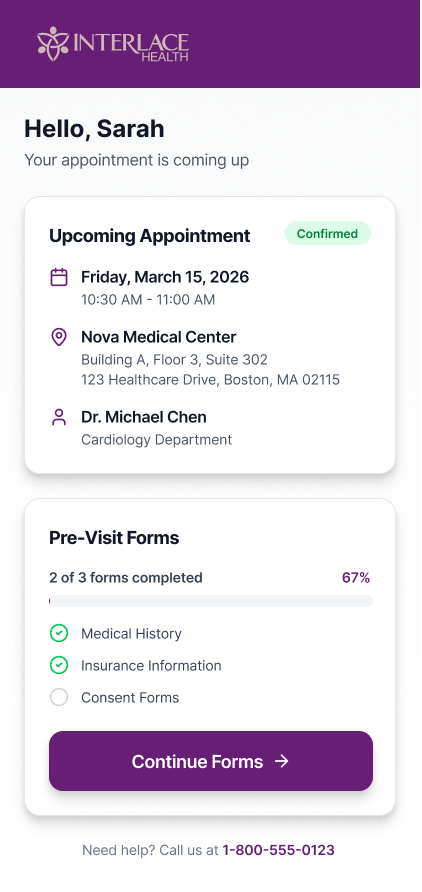
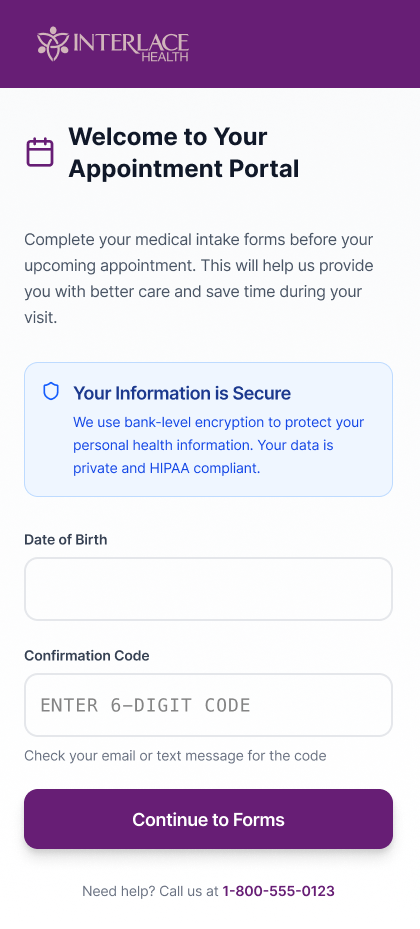
A mobile-first web workflow giving patients a clean, self-service interface to view upcoming appointments and complete all required forms ahead of their visit.
The experience was designed to require no app download, no account setup friction, and no clinical literacy to navigate. On the staff side, form completion status surfaced contextually within the existing Interlace dashboard so receptionists could see exactly where each patient stood before they walked through the door.
Selected Patient Screens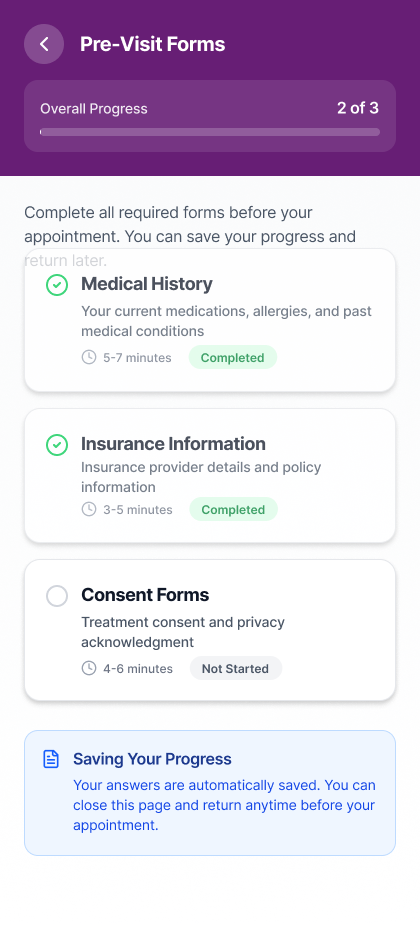
The Outcome
Appointment delays dropped significantly across client sites that adopted the feature. The volume of clients relying on third-party solutions declined as the native feature replaced the workaround.
The add-on created a new revenue stream and directly reduced churn risk among clients who had been quietly absorbing the cost of a gap in the product.
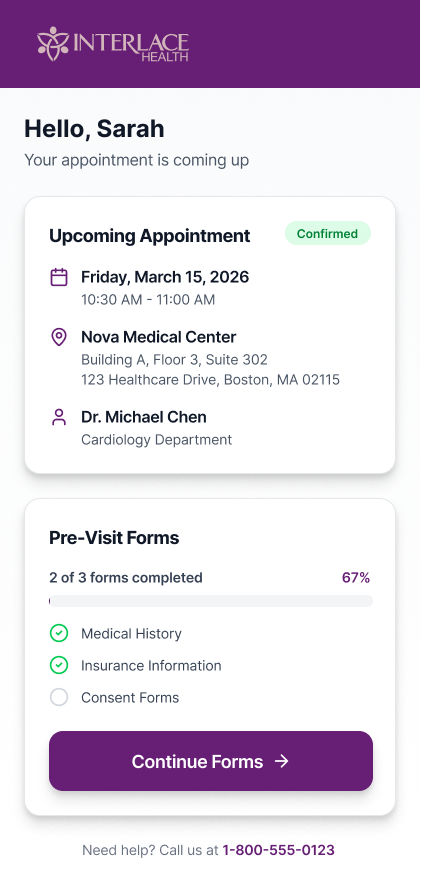

Provider Web View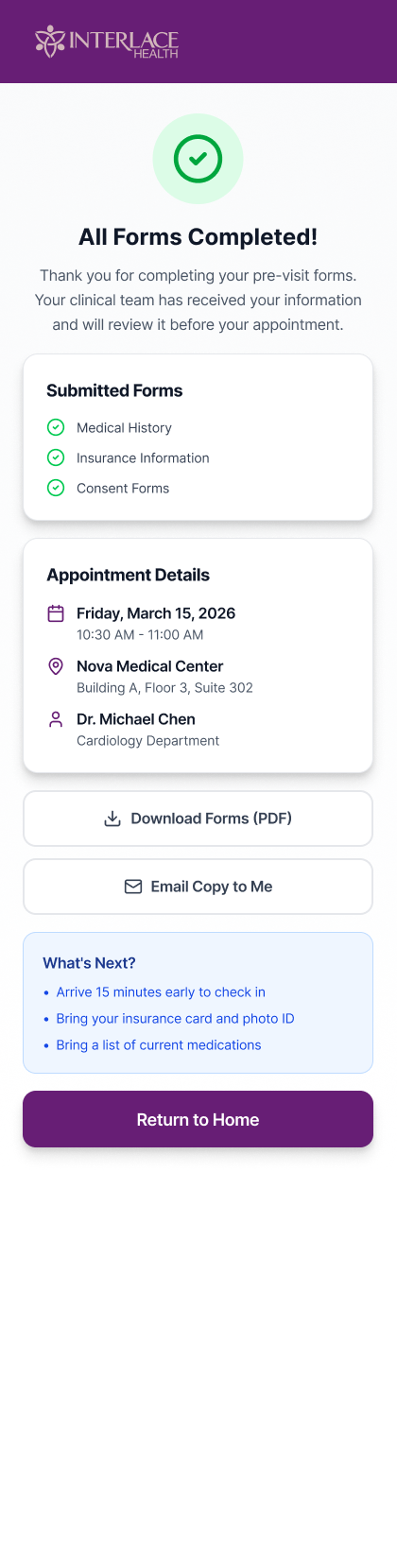
Lessons Learned
The most valuable design insight here was not about the interface, but it was about alignment.
The patient experience problem and the business revenue problem turned out to have the same solution. Finding that overlap early, through research rather than assumption, was what made the outcome possible.